TEM imaging and particles

Measure against the source calibration.

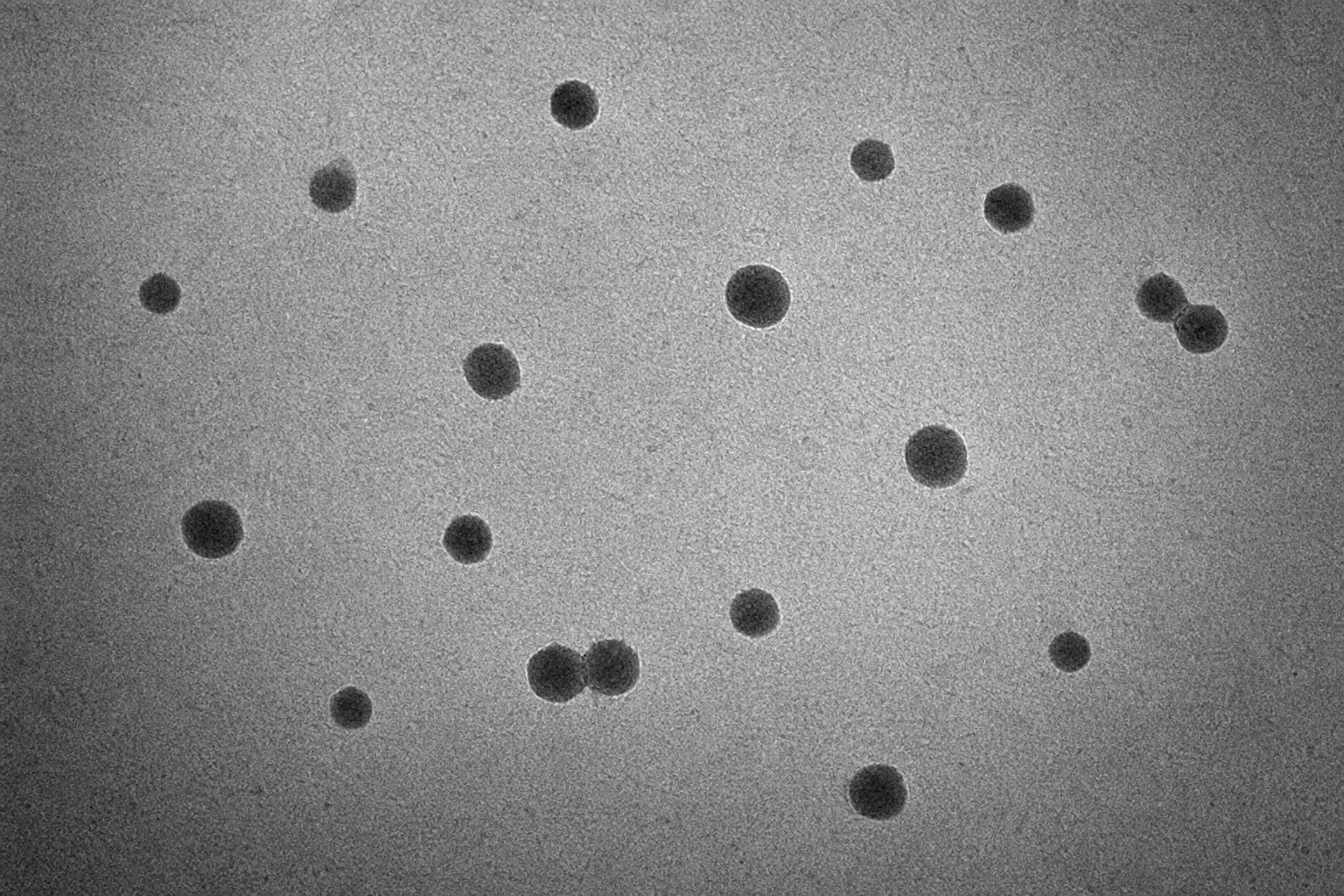
Open calibrated TEM data, inspect the full field of view, add a scale bar and measure particles without converting the acquisition to a generic screenshot.

Neutral demonstration TEM image containing dispersed particles
Neutral demonstration data. No customer specimen is shown.

Image to publication-ready statistics

The scientific record keeps calibration, reviewed segmentation, exclusions and sampling context beside every distribution.

01 · Input & calibration

Calibrated TEM image or stack

Read source metadata, spatial sampling and units; verify the scale bar against the source or a documented user calibration before size analysis.

Accepted input
DM3/DM4, calibrated TIFF, MRC and supported HDF5 datasets
Quality gate
Known length calibration and representative field of view
02 · Method & review

Segmentation with visible acceptance rules

Record polarity, background correction, threshold, watershed/separation settings, size bounds and edge-object policy. Accepted and rejected outlines remain reviewable at every zoom.

03 · Scientific results

Population and morphology

PopulationCount, number density, area fraction
SizeEquivalent diameter; number-weighted and area-weighted distributions
ShapeMajor/minor axes, aspect ratio, circularity, projected area
ReportingMean, median, SD, percentiles, range and sample size
04 · Export & provenance

Figures, tables and reusable data

The export package separates the observation, derived measurements and analysis record.

Publication figuresAnnotated TIFF/PNG with accepted outlines and scale bar plus number- or area-weighted distributions
Quantitative tablesOne row per object with size, shape, inclusion state and population summary
Reusable dataOriginal-calibration TIFF plus CSV or XLSX for independent statistical analysis
Scientific reportPDF and HTML with method, exclusions, sampling limits, software version and provenance

Illustrative interface descriptions only. Statistical validity still depends on sampling, contrast, overlap and expert review.